
Vigil
on sobriety, and faith without witness

My life has been nothing but a long rehearsal for disgrace. All my years have been spent in the company of my own shame. I cannot imagine what it would mean to live as other men do, to move through the world without the constant weight of oneself. And I cannot picture the life of a man who walks without it.
I imagine it must be a sort of blindness, the kind that allows one to move through the streets without hearing the echo of their own footsteps, without wondering whether each glance cast their way carries accusation or pity. I have never known such blindness. For me, each movement, each word, has been weighed against an invisible ledger whose rules I neither wrote nor understand, yet which I obey without question.
-from Arise and Eat
I move through the days as if through a corridor of mirrors, each one showing a distorted reflection of myself, stretched, bent, smudged. I have long since given up on finding the one that might show me clearly. For someone like myself, in whom the ability to trust is not simply absent but splintered beyond repair, every face is a cipher, every smile a code I cannot crack. I study the curve of a lip, the brief tremor in an eyelid, the fraction of a second before the eyes shift away. I do not read people, I dissect them.
And yet, even in this endless autopsy of human expression, I find nothing to hold on to. The more I look, the less I see. Perhaps it is my own reflection getting in the way, perhaps it is the suspicion that whatever warmth I perceive is only my own desperate longing projected outward. So I recoil. I smile when spoken to, nod in the right places, but it is a smile trained like a soldier, a nod rehearsed like an actor’s cue.
Some days, I envy those who can surrender themselves to others without fear, without calculation. To speak without rehearsing the weight of every word. To reach without measuring the distance first. But I suspect I would not survive such freedom, it would be like stepping into the sun after years underground, the light would blind me, the air would burn my lungs.
I envy those who drift through life, certain of their place in it. I don’t believe their certainty is founded on truth, but their ignorance has the shape of peace. My own peace, if it ever existed, was smothered in its crib by the suspicion that nothing I did was ever entirely innocent. I cannot tell if I am judged more by others or by myself, the line between the two has dissolved, and now I carry the gaze of the world inside my own skull. I am both prisoner and warden, accusing and defending myself in trials that never end.
If shame were a disease, perhaps I could cure it, or at least find a name for it and be excused from the demands of life. But shame is not even a wound, it is the skin. To remove it would be to unmake myself entirely, and that is why I shall remain. I do not know what it means to live as other men do, but I have learned what it means to live like a man dragging his own verdict behind him, waiting for the day the sentence is carried out.
I remain here, in this half-life, where every glance feels like a question, and every answer is a lie I tell to make myself a bit accepted. I have learned the art of passing unnoticed, of appearing harmless. I have learned to carry my unease as if it were simply part of my nature, like a limp or a stutter. People do not see the cracks if you never let them look long enough. I am just a collection of controlled exposures, and a face composed for the benefit of others. Whatever remains beneath it is a territory I no longer dare to enter.
…
I walk into churches like I’m retracing a life I might’ve lived, if things had gone differently. If I’d said no when it mattered. If I’d never betrayed. If I’d stayed. If I’d left sooner. If I’d never learned how to disappear. I walk into churches like a man trying on names that don’t fit. I do not kneel. I do not pray. I sit in the back, where the shadows settle like ash, and I wait for something I do not believe will come.
I never pray. I don’t know whether I believe in God, but I think He stopped believing in me. The candles flicker like they remember me— but not fondly. I light one anyway for the silence I’ve made a home out of, hoping that silence might recognize me first.
I walk into the church the way some people return to old lovers, with shame in my pockets. Guilt hums louder in echo chambers. And forgiveness— forgiveness is for the living. The dead never ask you to make amends. I’ve only ever spoken fluently in regret. I am haunted by the ones I left behind without ceremony. Haunted by the people who survived me. I am Haunted by those who still dream in my shape.
They hold meetings in the side chapel. Folding chairs, and paper cups. Hands shaking from withdrawal and memory. I go, and I listen. I say my name without conviction, like reciting a rumor someone once told me about myself. I go not because I believe I’ll be saved, but because the sound of strangers saying “me too”, feels holier than any scripture I’ve read. There’s a woman who speaks of her son as if he were still redeemable. Her voice never cracks. She forgave him long before he even knew how to sin, and I wonder what it would’ve been like to be loved without a ledger.
One man said, “God doesn’t hate you. You just haven’t forgiven yourself yet.” I almost laughed.
I took a sip of warm water instead.
…
I think we show up to these rooms just to be seen, to be counted among the still-breathing. Sometimes I think healing is just grief with better manners. I tried believing once. Or maybe I tried faking it well enough that belief would follow like an obedient dog. But God and I never got along. He kept giving me chances and I kept burying them like bad habits, I kept burying them with bad habits.
When I was young, a priest told me that sin was a debt. But no one ever taught me how to pay it off without hurting someone. Faith is a slow, stubborn thing. It doesn’t arrive like lightning. It shows up like a stray dog, half-starved, waiting to see if you’ll feed it or flinch. And if I could feed it I would, if I weren't still searching for scraps myself.
Some mornings, I wake up and don’t recognize the voice in my head. It’s calmer now, It’s quieter now, like an old friend who no longer demands anything of you. My sobriety is held together by guilt and repetition. I light a cigarette before speaking. I pour coffee before thinking. I don’t confess anymore. I mark each day with coffee instead, and candles instead of hope. I don’t pray, but sometimes I linger. Sometimes, after the meeting, I stay behind and help clean the chairs. It’s not much, but it feels like penance. Plastic scraping on tiled floor, the sound of small, stupid redemption. They say faith moves mountains. I’d settle for it moving me one inch closer to the man I could have been, though I have burned every bridge behind me and made of them ash upon the road of my wandering.
And still, some part of me keeps showing up because silence, for all its cruelty, still opens the door. The old man at the café once asked if I was a writer. I said no. Because what would I write about, how to disappoint elegantly? How to breathe around guilt without choking on it? I don’t write anymore. I lost the rhythm of it when the words started sounding like apologies. Now I just carry them around, and they rot beautifully… My words!
…
There was a night, years ago, where I bled someone else’s blood into a hotel sink. I don’t think about that night often, but my hands do. They always said violence stays in the bones. My body remembers things I’ve promised to forget and when I sleep, I sometimes hear footsteps behind my dream-self. They never catch up, but I wake up sweating like they did. I go to the church on those days.
I never pray on those days. I just look for distance, to sit inside a building older than my shame, to listen to walls that have survived centuries. Sometimes I envy the walls. They’ve watched everyone fall apart and never once had to speak.
I don’t believe in redemption. But I do believe in showing up. I show up to the meetings, I show up to the church that doesn’t ask anything from me. I show up to my mornings that used to be enough. I’ve been sober, thirteen months now. Thirteen months of learning how to live without anesthesia. Thirteen months of sleeping with the windows open so the ghosts can come and go freely.
Thirteen months of remembering every sin in high-definition. No blurring, and no rewinds. Just memory— raw and stubborn memory, and always arriving uninvited. Sometimes people clap when I say it at meetings, thirteen months, like it’s a miracle. They mean well, but it feels like being applauded for not jumping off a bridge you still dream about every night. Some mornings I still wake up expecting the weight, the dry mouth, the missing hours, the shame curled up on the bathroom floor. But it doesn’t come, and that absence scares me more than its presence ever did.
I used to believe suffering meant something. Now I think it just exists. Like rust, or mildew. It grows in silence and calls itself penance. It just exists. My sobriety… my persistence… they’re not miracles, but they’re enough. Enough that they could be. You learn to live on breadcrumbs when grace is too expensive.
…
I romanticize collapse. I make poetry out of ruin just to justify returning to it. Sometimes I miss the man I was when I was numb. Awful being, but he didn’t flinch every time someone said hope. I don’t do drugs anymore, but I still want to, especially at night. When the world goes quiet and the sky turns pale waiting for a confession I am not yet capable of giving. I want to, at night, when old faces text “just checking in” and I wonder if they still dream in my voice. Oh at night, when my hands twitch like they’re remembering how to forget.
But I don’t.
I don’t do drugs anymore, and I have not healed.
I am at my lowest at night. They stretch long and wide, these hallways of one’s sorrow. Each hour clicks its tongue at me, disappointed in me, intimate in its familiarity. I don’t sleep much at night. I haven’t in years. Not since heaven stopped answering, and I stopped knowing who was asking. I light a cigarette, not out of need but recognition. Flick of the lighter like a nervous tic, Its glow like a distant lighthouse I never reach. It’s not the smoke that soothes me. It’s the pause between drags—
…
It’s the pause between drags, that moment when I hold the breath in, as if quieting something inside long enough to feel being. I still dream in patterns I’ve tried to forget. Mirror lines on bathroom counters. Blackened spoons and bolted doors. Phone calls I never answer. Hands I held too tightly before vanishing from their lives. I don’t follow the rituals anymore but they follow me. Old stubborn demons with good aim.
My attempts at connection are stained things, held together by apologies I haven’t said yet. And there are nights when I light one cigarette after another, each ashtray a graveyard of confessions of mine. There are nights when I hold the razor too long. Nights when I let the water run and try to remember what it felt like to believe in warmth. Nights when I scroll through names in my contacts, finger hovering, not to call, just to remember the sound of someone calling my name… I am alive!
Long nights, and longer silences, and I stay sober. I still count my days like beads on a broken rosary. I stay up until the sky forgets its darkness, until the first sliver of light cuts through the blinds like a blade, and I pretend it’s enough. Oh what fragile peace! What ache that never screams but never leaves!
At night, I boil water. I don’t even drink tea. I just like the sound of something trying to become warmth. I still write letters I’ll never send. And sometimes I press my ear to the wall, listening to the couple in the next room fight because even broken love sounds better than this mute one of mine. Some days I feel like a scratched record, repeating, skipping, but still playing. And when the night comes again, as the night always does, I might light another candle.
I stay, as I must stay.
…
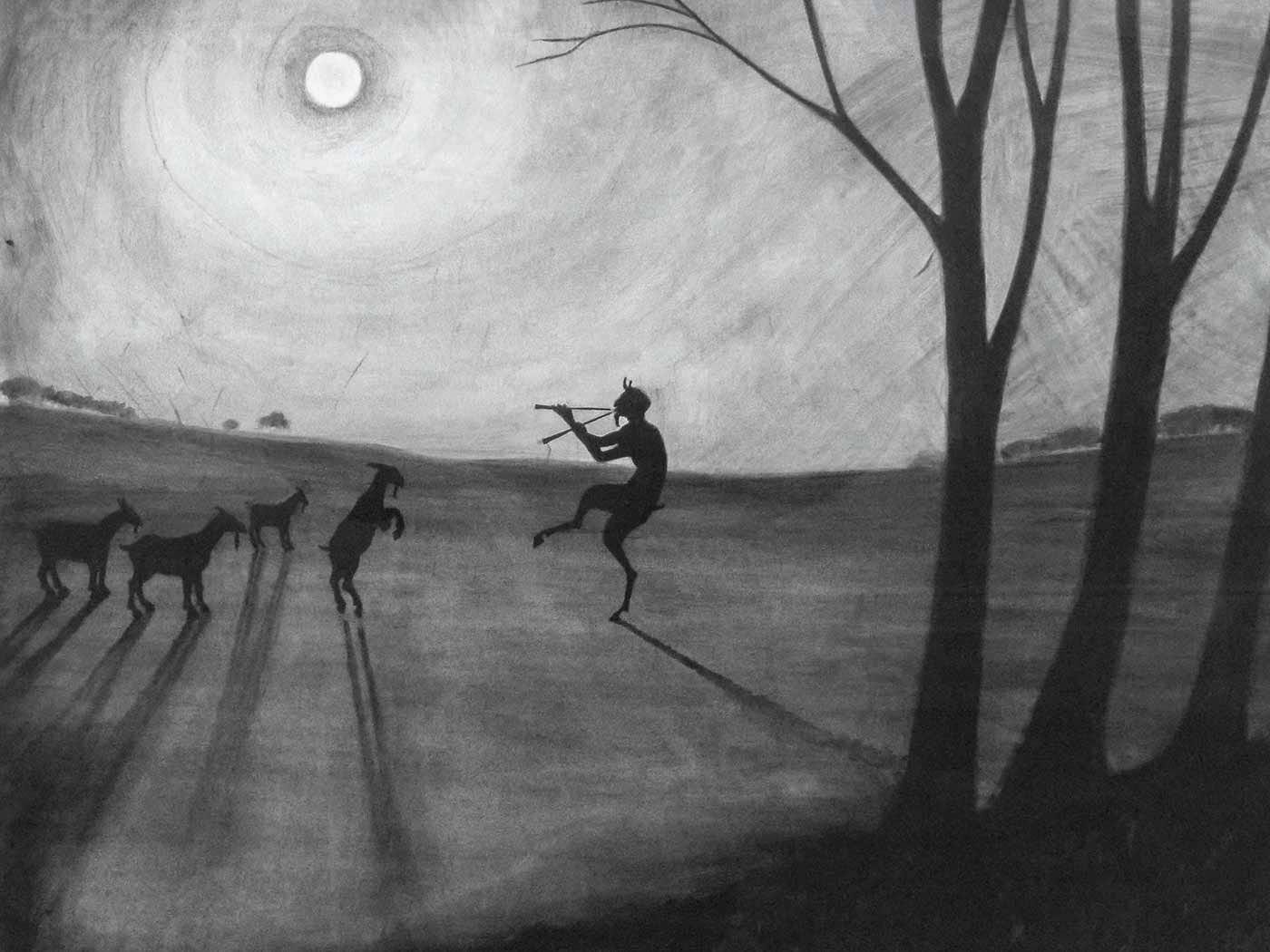
What do you do with a life after you have nearly destroyed it. Not as a question — I am past the question mark, past the register in which this can be asked with the genuine expectation of an answer. As a condition. The condition of the person standing in the ruins of the thing they built and broke and are now supposed to do something with, the something being unclear, the clarity not arriving on the schedule the recovery literature implies it arrives on.
I do not know what to do with it. I have the life. It is mine. It is what the surviving produced and the surviving was real and the cost of it was real and the people who paid part of the cost without being asked are still paying in ways I cannot see from here. I have the life. I sit in the back of the church where the shadows settle like ash and the light comes through the windows at an angle that is genuinely beautiful and nothing is asked of me and I give nothing and sometimes, in the specific silence of that, I feel something I do not have a word for that is not peace and is not faith and is not hope and is also not their absence.
I may find no grace awaiting, no grand design unfolding. There is no God in this room, at least not the one I’ve been told of. Only the absence of one, forsaken by my own creator, I find only the silence of one stretching too wide, painting these hallways of one’s sorrow.
Breath becomes obligation. Days bleed into days. Faith, like a lost thing, huddles in corners, a memory of light without the eyes to see it. There is no redemption waiting for me, and if I go on, it is not rebellion, but my inability to commit to my own despair, a sorrow too tired to collapse. I stay and I remain, because I have nothing else to do. Faith, without witness, is like a whisper no one hears, and I listen for it, because I have nothing else left to do.
That is the whole accounting. That is all I have.
It will have to be enough.
-from, The Epistles of Forgiveness
…
From this collection:
Estrangement

I sit among them. Their voices are bright, happy, convinced. They speak and nod at each other. Everything makes sense to them. I watch, I am an alien. I do not understand, and I do not belong.
Damnation

I was not born with faith. I was born with fear, raw, choking, irrational fear. Fear of the dark, of hunger. Fear of my mother’s hands, of my father’s silence. Fear of being seen and fear of being forgotten. And in place of God, I worshipped these fears. They were the only things that answered me when I called.
🙌🏻 (🫳🏻🤝🏻🫂)
incredible piece, through and through. takes incredible strength to write on the topics you do, and i admire it so much!