
Damnation
on fear, shame, and survival

I was not born with faith. I was born with fear, raw, choking, irrational fear. Fear of the dark, of hunger. Fear of my mother’s hands, of my father’s silence. Fear of being seen and fear of being forgotten. And in place of God, I worshipped these fears. They were the only things that answered me when I called.
When I was a child, people told me there was a God. I nodded. Not because I believed them, but because I had already learned it was easier to agree with people than to invite their pity. They said God loves everyone. I thought, “That’s a dangerous amount of responsibility for one being.”
People talk of faith as if it were a warm light in the cold. I have only ever seen it as a fire in the distance, too far to touch, too far to save me, but close enough to burn if I reach for it. I have envied those who could kneel before nothing and feel the presence of something. I’ve never had faith. I’ve had headaches. I’ve had shame. I’ve had an insufferable tendency to keep walking even after I’ve realized I’m lost.
I don’t pray anymore. But when I did, I never prayed the right way. My prayers were always a kind of theatre. They were like badly written plays, where I played all the parts, performed for an audience I did not believe in but could not risk offending. And the audience left halfway through. I could almost hear the chairs scraping. And still, I performed. Why? Because I thought maybe, just maybe, there was a stage manager up there, someone keeping track of the acts deciding if I was worth keeping for the second half.
I have never prayed to be saved. I’ve prayed to be seen. That’s the crueler wish, the one that leaves you naked in the public square of your own mind. They say prayer is a conversation, but I suspect mine are more like confessions screamed into an empty well. My own voice returning, warped, tired of me.
There was a time I mistook absence for proof. If I could not see Him, then surely He must be everywhere, hidden, watching, waiting for me to deserve revelation. But years have passed, and the silence has not changed its tone. Faith became an empty room I kept dusting. The air smelled of neglect yet I convinced myself that preparing it for a guest who would never arrive was an act of devotion. I knelt not in prayer, but in habit. The body remembering a gesture even when the soul has forgotten the reason.
As I grew, I learned that the absence of God is not an empty space, it is a mirror. You ask for guidance and all you see is your own face staring back, flawed, exhausted, pretending to understand. You look into that glass long enough and you start inventing gods from your own reflection. I’ve worshipped things. Oh yes, I’ve been devout. I have been many kinds of believer, not in God, but in the things that replaced Him. In money. In beauty. In the eyes of a lover. In the quiet promise that tomorrow would be different. I believed once, but only in the way a moth believes in the candle, it’s warm until it kills you. And each time, after my altar collapsed, I went crawling back to the rubble. I knelt in the rubble. And I begged in the rubble for one more miracle from the dust.
The thing about a godless world is people say it’s empty, but it’s not. It’s too full. I once thought a godless world was freedom. But it is only freedom if you are strong enough to bear the truth. Without commandments, you invent rules for yourself. Without heaven, you invent punishments you cannot escape. In my mind, there is no forgiving Father—only the endless tribunal of one’s own conscience, and its verdict is always the same: guilty.
Sometimes I wonder if this is faith after all, not in salvation, but in damnation. A belief so absolute, so unshakable, that even death will not loosen its grip. Perhaps my godless world is not godless at all. Perhaps I have built my own cruel deity from shame, from memory, from the weight of every word I never said aloud. And when I try to argue for my innocence, my own voice interrupts reminding me of the gallery of lies I’ve curated over the years. Each frame a portrait of myself painted in the colors of excuses. There is no god in these halls. Only my reflection, watching me with the same disappointment I once reserved for heaven. Or perhaps that god has been with me all along, silent but watching, waiting for the day I finally kneel without pretending.
I think the prayers I send are just invitations to the gallows. And every time I climb those steps in my mind, I’m not afraid. I’m relieved. Because faith, in my world, isn’t hope. It’s the certainty that the blade will fall exactly when it’s meant to and that the shame will outlive me.
...
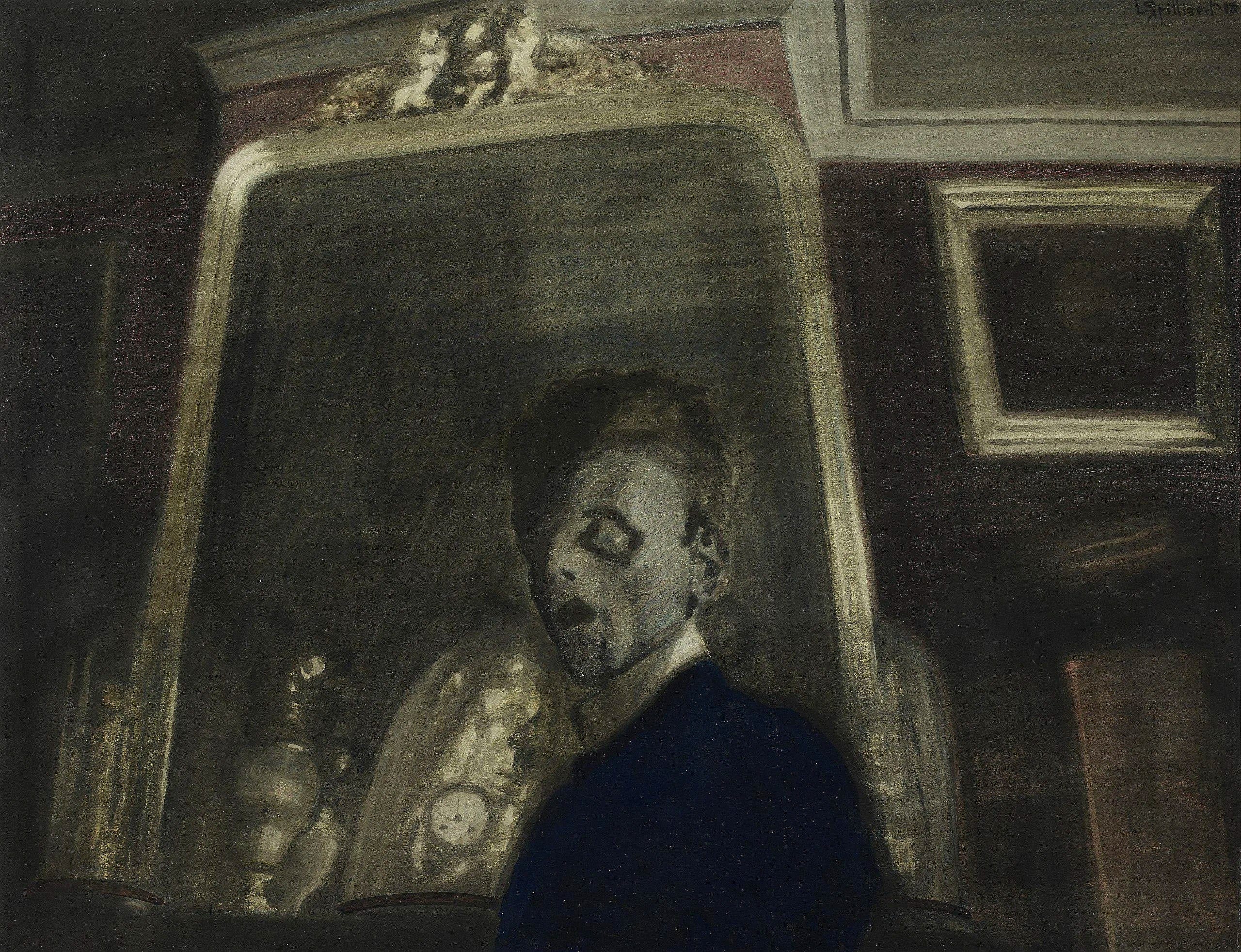
People live through the same life I did. Grey mornings, small betrayals, the slow erosion of whatever they once believed in, and then they die, suddenly or expectedly, as if the world had been waiting for the right moment to erase them. Death comes like a clock, precise and indifferent. And yet it refuses me. I have survived overdoses that should have carried me into the dark without ceremony. I have woken in rooms I do not remember entering. I have woken on kitchen floors and in strangers’ beds, my mouth dry with the taste of farewell I never got to say. I have walked away from accidents that should have left only twisted metal and blood, wreckages that should have written my name into dust.
People tell me there must be a reason. They look at me as if I am proof of something. I tell them there isn’t one. Meaning is a luxury for the living. Survival is absurd. It is an error in the paperwork of existence, a cruel misprint left by an author who has no care for the lives of his characters. And if there is a hand behind this error, some guiding intelligence in the machinery of my persistence, then that hand has the humor of a sadist.
Some nights I imagine Him as a writer, endlessly revising my final scene but never satisfied, keeping me in the margins like a footnote no one will read. Other nights I see Him as a bored child holding a magnifying glass over an ant, just curious how long it can keep crawling before it burns. My continued breathing is not a miracle. It is a punchline. And the more I linger the less I understand the joke. Whoever wrote it, whatever unseen hand pushed the pen, I call that hand God. Not a God of love or justice, but a God of timing, of misplaced laughter, of holding me just long enough to wonder why.
If this is faith, then it is not the faith of saints or martyrs. It is the faith of a condemned man who trusts the blade will fall exactly when it’s meant to, because it always has for everyone else. Only for me the executioner seems to be running late, as if uncertain which neck he was meant to sever, as if even the blade hesitates to strike the man who has survived too many times to be allowed peace. And so I wait, suspended between reprieve and sentence, wondering which will rot first, my body or my will to keep carrying it. I wait, and I endure, and I feel, in this cruel postponement, a terrible, unshakable intimacy with the god who never intervenes.
-from, The Epistles of Forgiveness
…
From this collection:
Ingratitude

Mother said there is always something worth thanking the world for. I've tried to echo her faith, as I search for it still—in the steam of morning coffee, in the pale mercy of dawn, but the words betray me before they reach my lips.

Two tones: one before the picture (artistic) and one after the picture (resonant). 🙌🏻 🌟
Do you think... you are free in darkness, or free in a lighter shade?
Damnation and redemption!
The search never ends, the altars change, the acceptance matures, the crests and troughs of damnation settle into a shimmering surface of redemption in the golden haze of the peaceful sunset.
And then eventually, the Gods themselves arrive in their multitudes, for change is the only constant in universe.
Raw, visceral write up!